Teams shipping AI agents need enforceable guardrails — not prompt-only "please don't leak PII" — plus a place to see what the agent actually did. Relay is a policy gate for AI requests: a Go gateway and React AgentOps control plane to authenticate, run policies, queue risky writes for approval, and log redacted audit rows to Postgres. Adult supervision when agents need it.
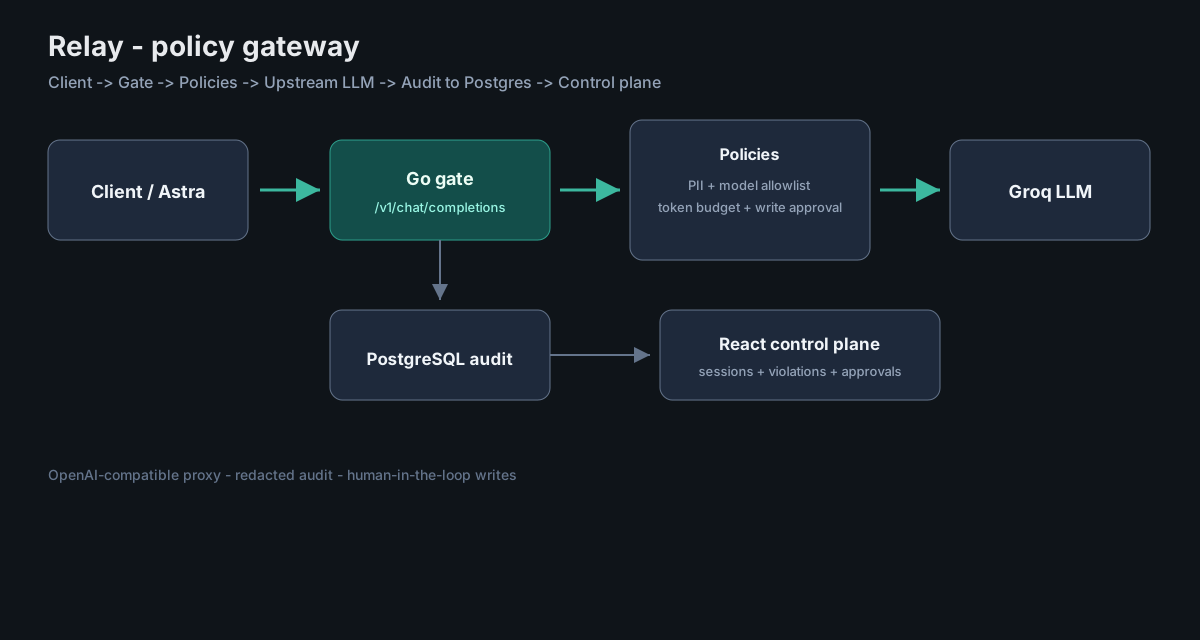
Gate the model. Approve the writes. Audit everything.
Project overview
The challenge
Agent demos without a control plane look like chat toys. Operators need PII blocks, model allowlists, spend caps, and human approval for writes — with an audit trail that never stores raw secrets.
My role
I scoped and built Relay as a separate service in Portfolio/relay: Go gate in front of Groq, Postgres audit, React control plane, smoke tests, and optional Astra integration via env.
Three pillars
- OpenAI-compatible proxy: curl or Astra can swap a base URL and keep working.
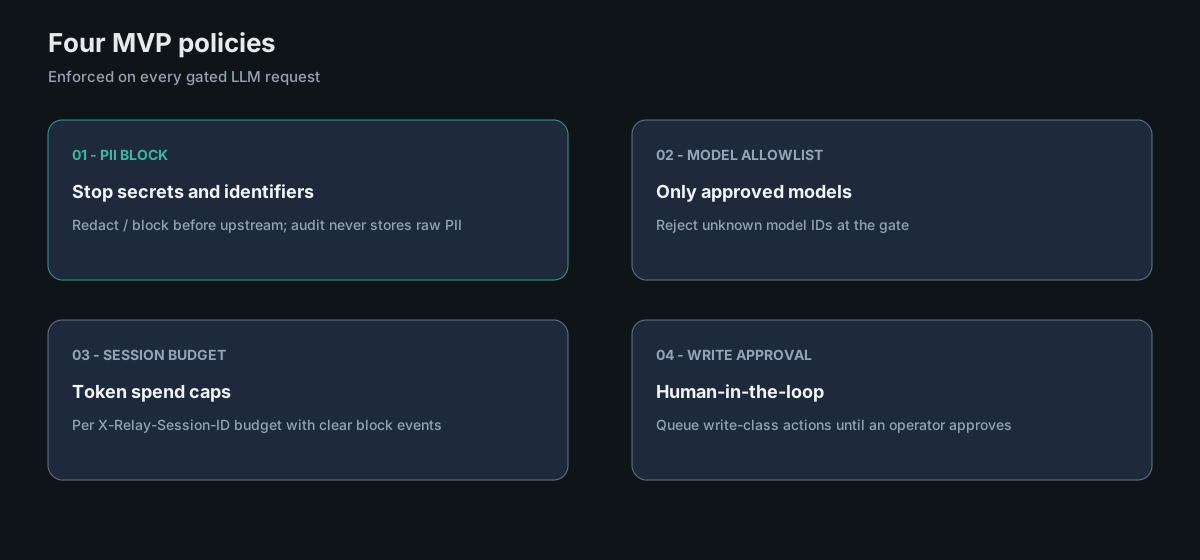
- Four MVP policies: PII block, model allowlist, session budget, write approval queue.
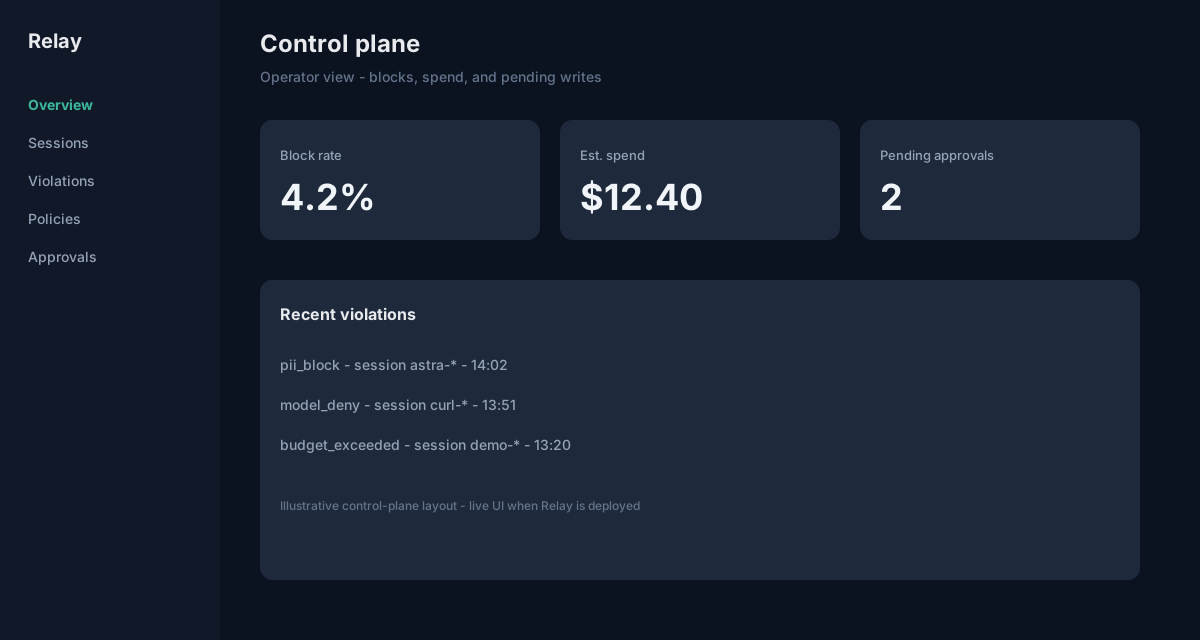
- Operator UI: sessions, violations, policies, approvals, CSV/JSON export.
Exploration & discovery
Gateway vs SDK
Putting policy in a gateway keeps every client honest — including future agents — without forking each SDK. ADRs document gateway choice, immutable audit, and human-in-the-loop writes.
Interview-demo constraints
MVP had to be demoable without enterprise billing or multi-tenant complexity, while still showing real blocks and approvals.
Astra correlation
Optional portfolio path: RELAY_GATE_URL + RELAY_API_KEY with X-Relay-Session-ID so Astra turns appear in Relay audit.
Build & process
Go service authenticates, runs policies, queues write-class actions, routes classify tasks when configured, and writes redacted audit rows. React/Vite control plane talks to the admin API. Smoke tests cover gate, admin, and approval flow.
Policy set
PII block, model allowlist, session token budget, and write approval — enforced end-to-end on gated requests.
Control plane
Overview metrics, sessions, violations, policy config, and pending approvals for human-in-the-loop writes.
Impact
Operator-of-AI story
- Recruiters see agent (Astra) plus platform (Relay), not chat alone
- Four policies enforced with smoke coverage
- Architecture docs for gateway, audit, and approval design
How to try it
Run make dev in Portfolio/relay for local gate + UI, or set NEXT_PUBLIC_RELAY_DEMO_URL on the portfolio when a public demo is hosted. Case study diagrams explain the system when the demo URL is unset.
Reflections
- Gateway keeps every client honest — including the portfolio agent.
- Never store raw PII in audit: redact first, then log.
- Approval queues make "agent writes" safe to demo in interviews.
Product shots
Swipe for more →