I started FloAI Studio (floai.studio) because I needed a better way to market a business — and the problem turned out to be bigger than that. Creators and small teams still juggle a writer here, a media library there, separate logins for every network, and copy-paste scheduling. As founder and full-stack developer, I built one signed-in studio to draft posts, attach media, connect networks, and publish or schedule. It's live in production with OAuth + native publish paths, compliance pages, and ongoing vendor App Review. Still shipping — and still the project that taught me the most.
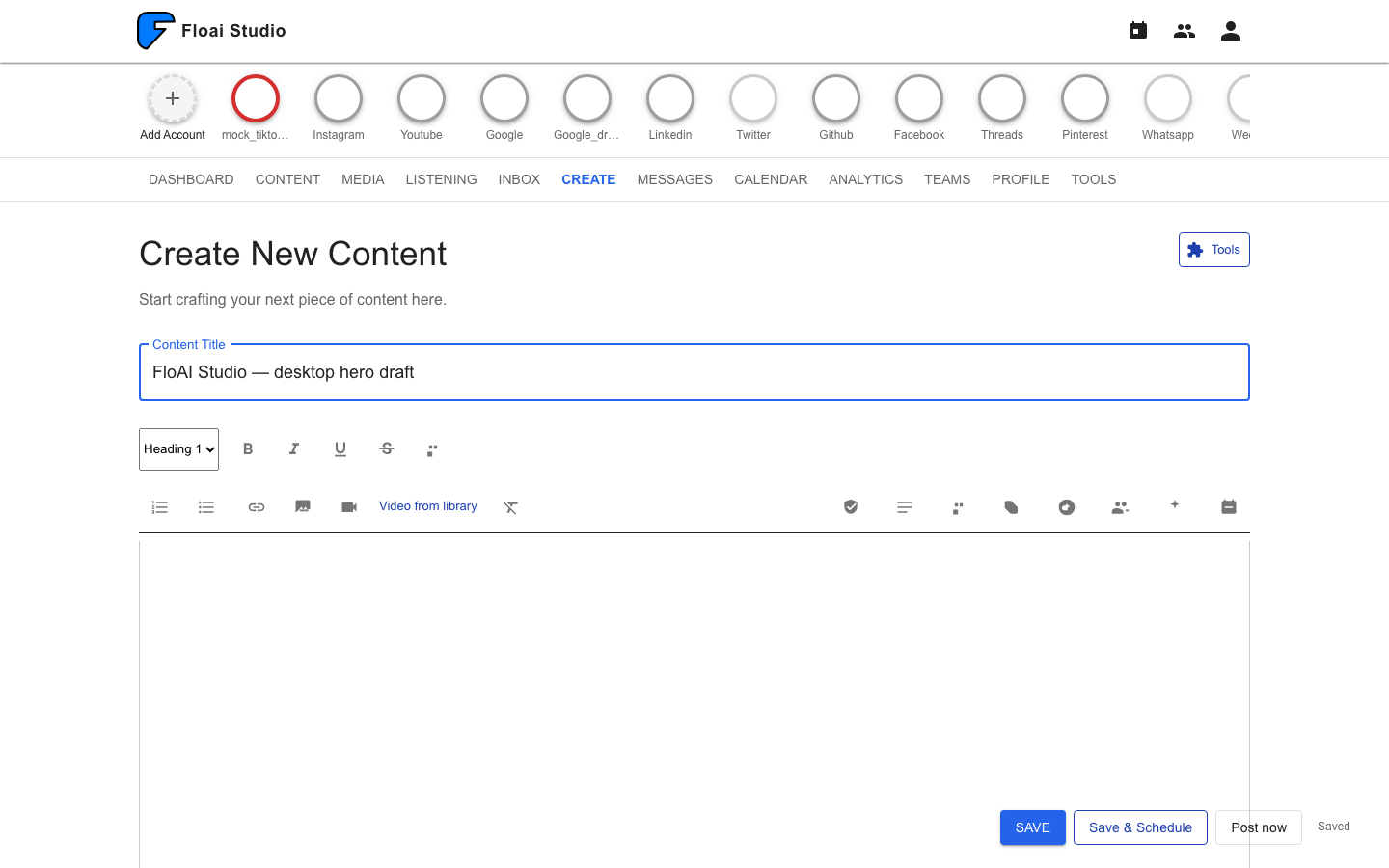
One studio. Many networks. Still shipping.
Project overview
The challenge
Social workflows splinter across writers, media libraries, schedulers, and per-network dashboards. I wanted one authenticated studio for compose, media, calendar, inbox, and publish — not another generic chat widget bolted onto the side.
My role
I own product direction and implementation end to end: Next.js App Router app, Prisma models, NextAuth, publish registry, OAuth connect flows, scheduling cron, compliance pages, Vercel production, and vendor App Review prep for major platforms.
Three pillars
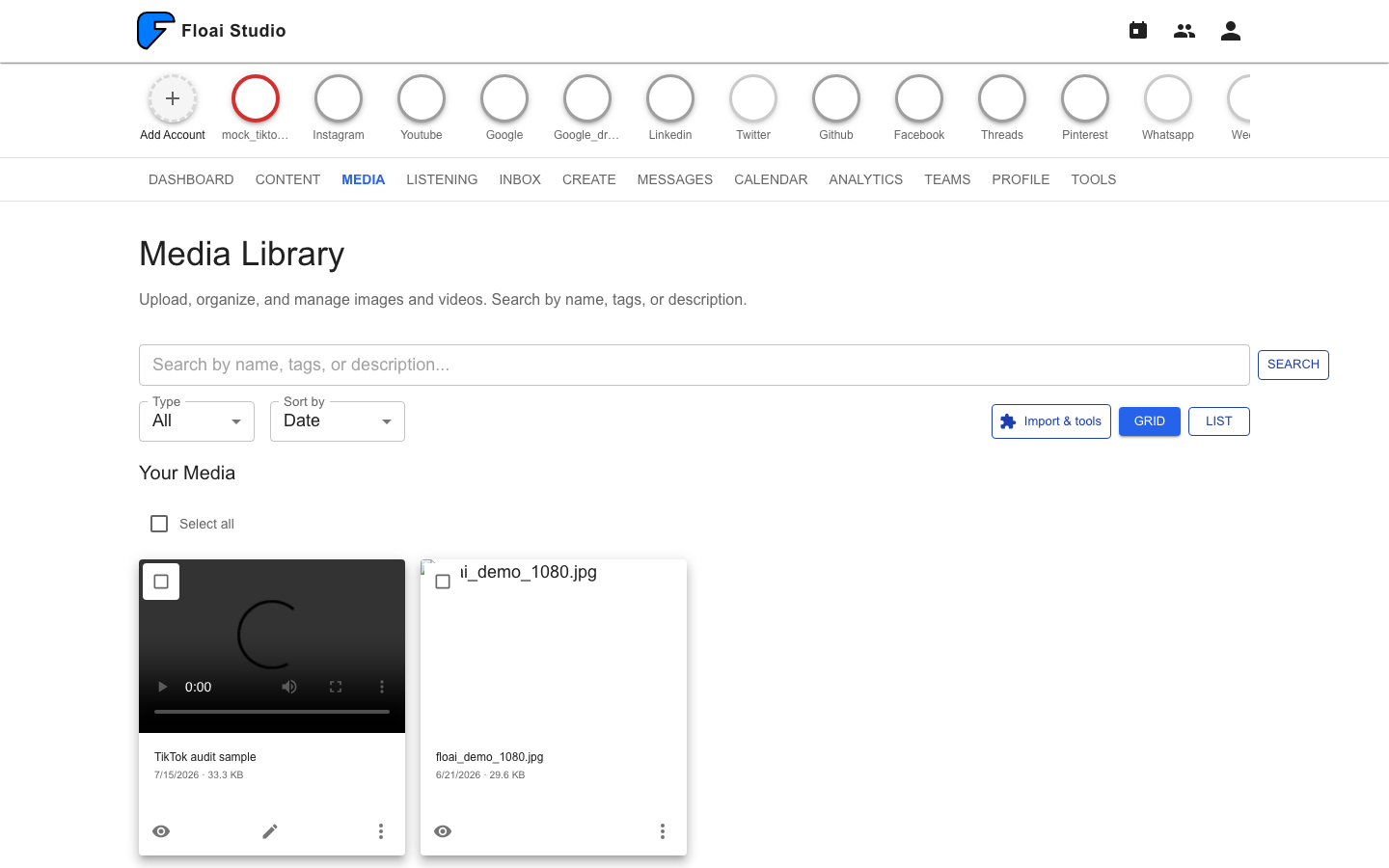
- Create & media: Composer, Media Library, AI-assisted captions, and calendar scheduling in one shell.
- Connect & publish: Profile OAuth + publish registry for 15+ networks; prod-verified LinkedIn, YouTube, and Facebook Page.
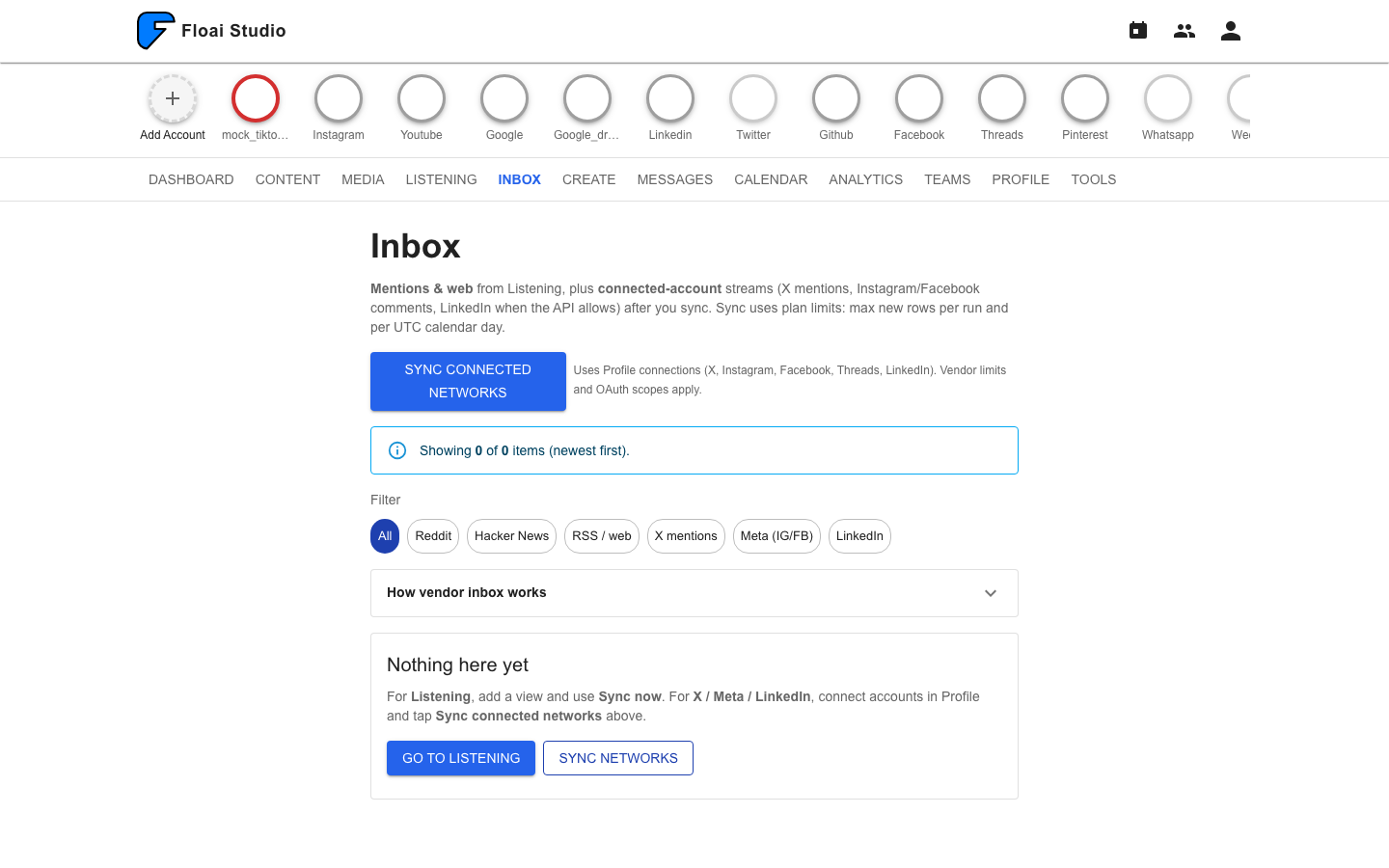
- Trust & ops: Compliance URLs live; Inbox sync where APIs allow; honest login wall for guests.
Exploration & discovery
CreatorFlow → FloAI wedge
Early brand and GTM work under CreatorFlow helped me nail the AI-first social studio wedge. FloAI kept that scope while tightening product naming, compliance, and production publish — the stuff recruiters can actually verify.
Platform reality check
Every network brings its own OAuth, redirect URI, and App Review rules. The product had to stay honest about what is prod-verified versus still in review, and keep secrets out of the UI.
Solo/small-team constraints
No dedicated platform team, so I leaned on shared publish conventions, feature flags for risky surfaces, and Playwright coverage on critical paths.
Build & process
Stack: Next.js 16 App Router, React 19, MUI, Prisma/PostgreSQL, NextAuth, Vercel Blob, Redis/Buffer queue, Playwright. Delivery rhythm: connect handler → publish path → smoke → docs → App Review artifacts when needed.
Publish registry
A registry maps each platform to connect + publish handlers so Create and Media Library share one compose/publish UX instead of one-off dialogs per network.
Schedule & inbox
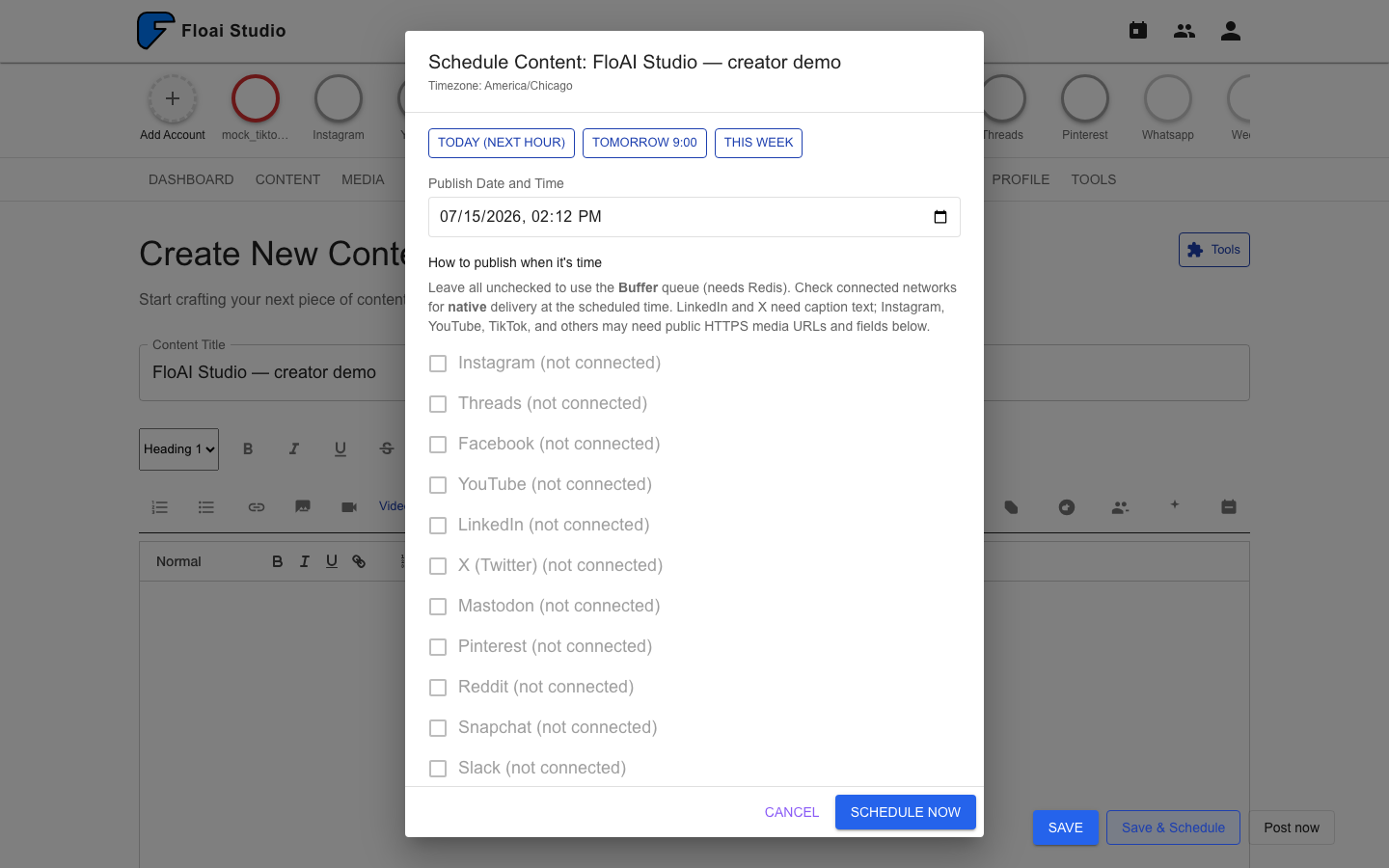
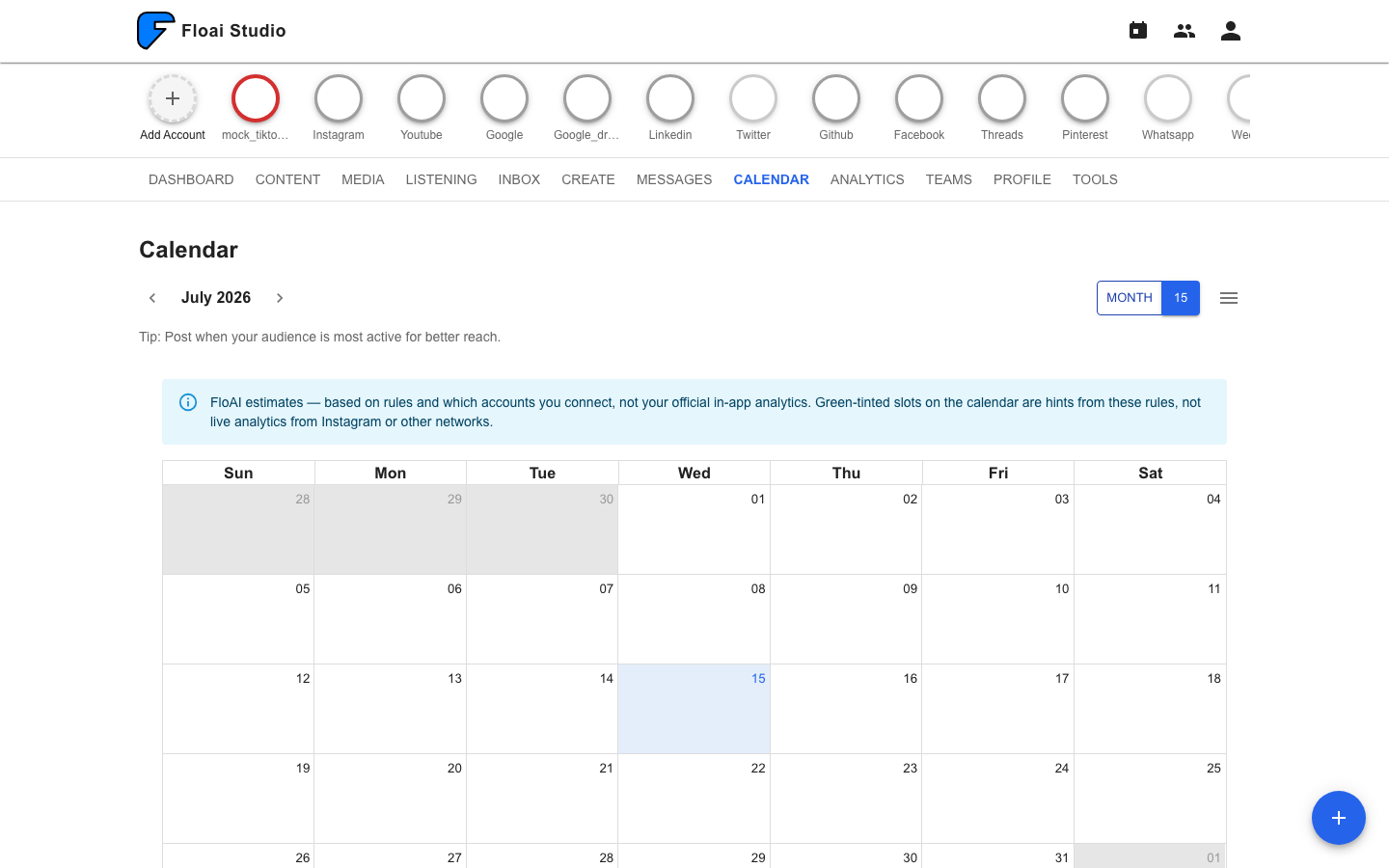
Calendar + schedule modal persist timed posts; cron routes handle scheduled publish and inbox sync for vendor comments/mentions where APIs allow.
Impact
Production SaaS
- Live at floai.studio with authenticated Create, Media Library, calendar, Profile integrations, and native publish paths
- Prod publish verified on LinkedIn, YouTube, and Facebook Page (May 2026)
- 15+ publish routes in registry; compliance pages (privacy, terms, data deletion)
What recruiters can verify
Open the live product (account required). Case study screenshots show Create, Media, Calendar, publish networks, and Inbox — not a logo stand-in.
Reflections
- Verified publish beats slide decks: LinkedIn/YouTube/Facebook Page posts in prod carry the interview story better than any deck.
- Registry over one-offs: shared connect/publish conventions kept solo delivery sane across 15+ platforms.
- Honesty on App Review: label what is live versus still pending — overclaiming every network is a fast way to lose trust.
Product shots
Swipe for more →